“Drive Into The…” Volume 2 follows volume 1 with a long-play high-energy continuous dance remix. It’s the story of a car race under, a post-apocalyptic, decaying city. Race up and over the first mountain then down, with a view of the city ahead, through the dust. Hit the down ramp underground and push faster, sliding across gantries and grates, swerving past basement columns, and kicking into high gear through the subterranean foundations of the city.
Instead of a Track Description I wrote a (Race)Track Description, a time-stamped continuous stream of movement where there’s always a competitor on the tailgate.
I’d love to know what you think of it in the comments, and I hope you enjoy Drive Into the Relentless Unknown | High Energy Atmospheric Electronica for Night Driving (Vol. 2).
Peter Gabriel has been writing, recording and performing music for decades. His lyrics and music is deeply affecting and life-changing. It’s changed my life. In this video produced by Peter Gabriel’s team, I loved listening to him talk about his new music and his creative process.
I created the band Ramsgate Quarterline to showcase a fusion of character-based music tracks. This is the mini-EP. A new experiment… a new experience… enjoy.
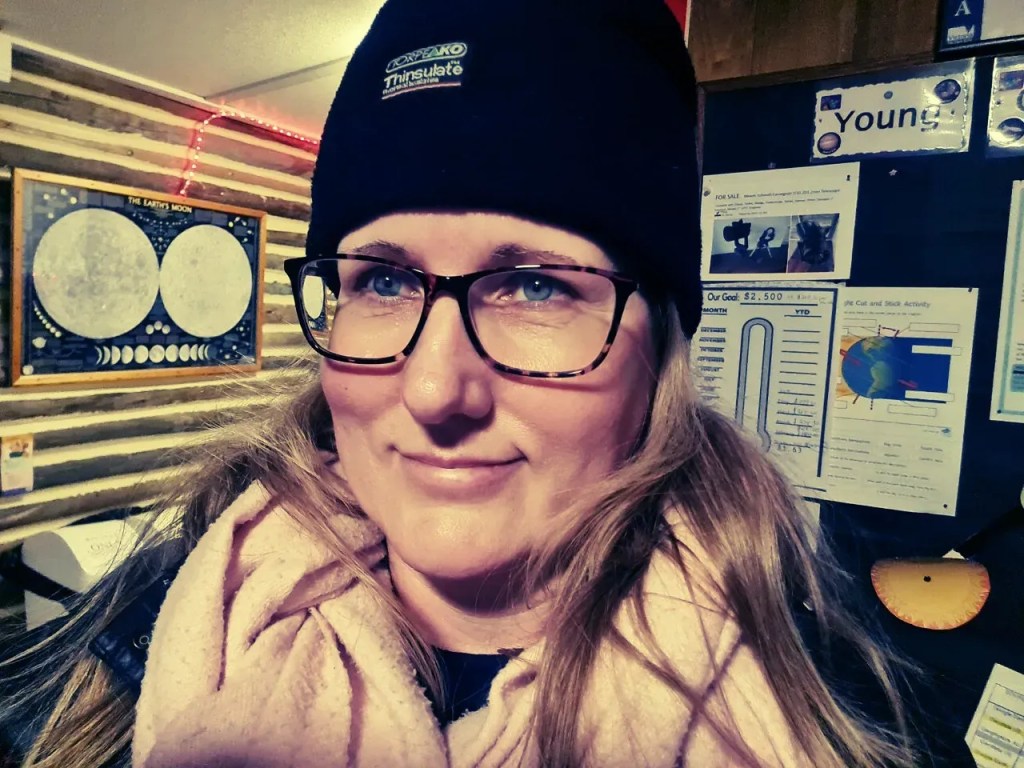
Miller, Marilyn. Marilyn Miller in the MBO Clubroom at Mount Burnett Observatory. Mount Burnett Observatory, Victoria, Australia. Photograph taken July 2025.
When I went back to writing fiction, a lightbulb moment happened: if I wanted a consistent creative practice, I’d need to make friends with what was happening deep inside me.
Let’s Meet Internal Resistance
We might think we can’t get back to the manuscript because we’re don’t have time, but I suggest the root cause of this distance from our work is a quiet internal resistance.
Internal resistance is emotional and psychological self-protection masquerading as procrastination. It is the silent horseman that pushes writers off their productive and satisfying paths of creative consistency. This deep cause of distraction can rob a writer of valuable months and years. It might look like being over-scheduled, or spending time socialising and missing our self-imposed deadlines. When this happens, I take stock. I ask, “What am I avoiding in my writing? Am I skirting around the edges of something, afraid to dive in?”
Making Friends with Internal Resistance
I spent years not writing fiction. I didn’t understand why writing fiction was important to me. Seeing no value in it, I spent a few miserable years writing about my life in my diary. It startled me when I realised what I was doing. I was still writing. Because I was writing, I felt a deep sense of alignment. It was clear to me I needed to express myself this way. It made sense to go ahead and work on a longer project, because finishing a novel would be a better use of my time than filling journal pages.
Writing and finishing my novel is what I wanted to do all along, but first I had to reckon with the resistance stopping me. This was no run-and-hide strategy. This was a conversation I had with this part of myself that won the debate with logic and experience. It worked in this case, but there would be many more to come, most of them so deeply carved into my interior landscape I would need more powerful searchlights and garlands.
Augustus Leopold Egg. The Travelling Companions, 1862. Oil on canvas. Birmingham Museums Trust.
Who is Your Constant Writing Travelling Companion?
How do you experience this internal resistance? For me it feels like an undercurrent of anxiety as I approach the page to start my next writing session. It’s as if something inside me is uncomfortable about confronting the unknown currents of the deep waters inside me. I’m afraid that I won’t be able to ‘do it’ today. That I’ll be wasting my time… These are the thoughts I have as the moment approaches. My worries sound like the warbling of an ill-intentioned ‘frenemy’ on a worn cassette tape. It rewinds and starts at the beginning when I haven’t heard it for a while. And when it’s loud and screaming in my ears I know I’m getting close to substantial work. This is what this resistance is to me. I need to watch for it. It can unnerve me to the point I’ll stop writing if I’m not careful.
I’ve worked hard to make sure my internal resistance doesn’t capsize my creative progress. To be in control of it and feel comfortable in its presence (which is always), I’ve had to accept it’s coming with me. It’s a constant travelling companion. And knowing that, I relax into no longer needing to fight it, or outrun it. It’s right here, next to me. It’s coming with me and I have to deal with it.
Getting to Know Your Constant Writing Travelling Companion
I experience this resistance as an obnoxious and self-concerned traveller sitting in the seat next to me on a long journey. It will be with me for the whole journey. At its most innocuous, it never gets off at the next stop, eats hot food, talks loudly on the phone, and favours candy with noisy wrappers. At its worst, it’s drawn the blinds and pulled the cord to stop the train.
When I start to resent this passenger, I remember I need to find a way to make friends with it, to find compassion for it, and to be ready when it kicks back. I know that how well I get on with this commuter determines the duration and quality of the creative journey I’m going to have. That’s because this passenger is the version of me that’s insecure and fragile. It doesn’t want to be exposed or noticed. More than anything, it doesn’t want to be embarrassed or shamed. It’s the hurt parts of me.
So, even when it’s being relatively quiet, I know it will kick, hard. So, I bravely offer an olive branch, and take the hand of this part of me, and reassure it I’m not here to hurt anyone. I tell it that I see it and I’m not a threat. I tell it that it’s safe. That we’ll work together on this, and this is how we get this done.
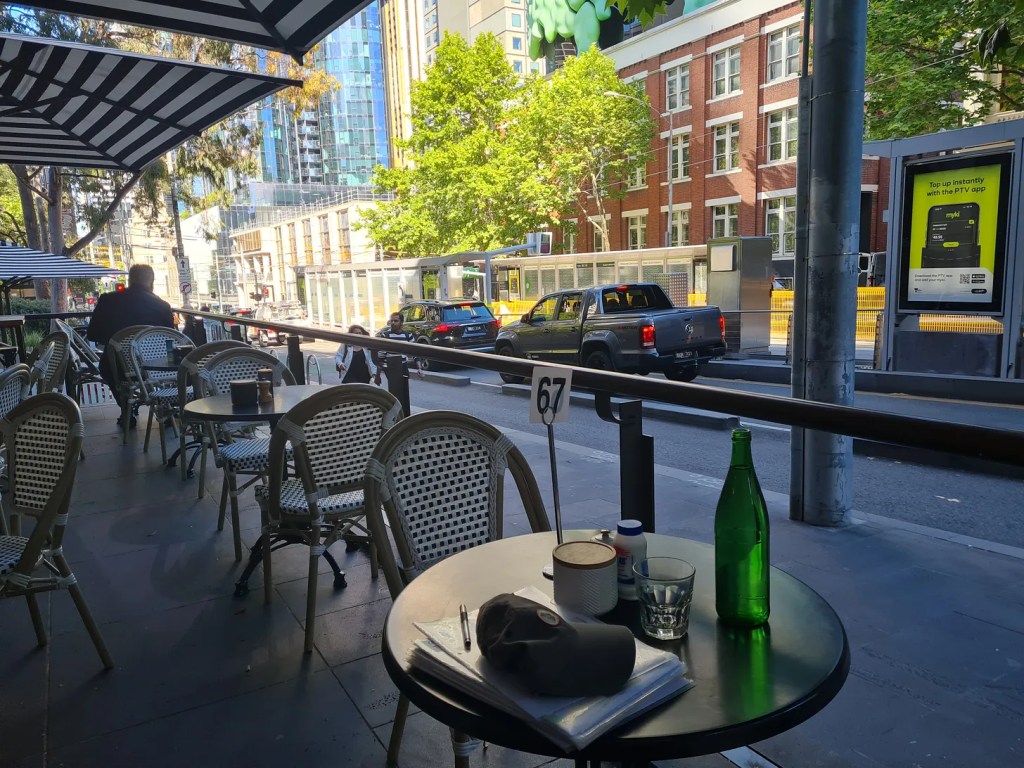
Miller, Marilyn.Coffee With The Shadow on a Sunny Day. Photograph. La Trobe Street café, Melbourne, Australia, November 2025.
Carl Jung Called it The Shadow
Carl Jung called this aspect of ourselves The Shadow. Dr Jung recommended getting to know it and integrating it, and so do I. Sometimes I think of it as structures in my subconscious, like interpretations, reactions and false beliefs. For those writers and artists out there, like me, who use all of themselves in their work, sooner or later we’ll encounter this internal resistance. It’s normal and natural and a sign we’re moving into useful, heart-based territory. The kind where the work connects and resonates. It’s the juice. Writing needs juice. It needs pain as well as heart-aching joy.
The Good News: Resistance is Juice
My writer friends who seem to come back to the page, month after month, year after year, have reckoned with their internal resistance, and they use it. They know it’s juice. They welcome it as the energy in their work. Even if they don’t fully integrate it, they know that being in touch with who we are is connecting to something real. If it’s not going in that direction while we’re working on a text, then turning the mirror back toward ourselves and inward, by journalling, can help us get in touch with this. On many levels it helps to become acquainted with this fellow traveller.
What’s Driving this Internal Resistance?
Fear. That my writing will be terrible. That someone will see something in me they don’t like. That I might see something in myself. That it will all be a waste of time. That even if I put my heart and soul into it, no-one will read it anyway.
We’re afraid our writing won’t be good. That it will be good. That it will be rejected or embraced. We writers can be highly conflicted. We want it all to work, or not to work. Are you wondering, it’s just fiction, it’s just a bit of creative practice, we’re just making it up anyway, so why are we afraid of that? Well, the truth is, we’re afraid because it means something to us.
Exercise: Pointing Resistance in the Direction You Want to Go
Internal resistance is the part of us that is trying to keep us safe from real emotional risk. The presence of it means you’re on the right path.
Let’s try something. Every time you’re about to return to the page, pause for thirty seconds and acknowledge the resistance. Not to banish it or argue with it, but simply to say, “I know you’re here. Let’s do this together.” I promise, the ideas will come in stronger, the impulse to doom-scroll will lessen. It will become easier to move deeply into the work. And why would we want anything else for our creative practice?
Have you encountered resistance with your creative practice? How do you recognise it? What helps you return to the work? I’d love to hear about your experience with creative resistance in the comments below.
2026 is Coming… Come and Meet Me
What are your creative plans for 2026? Now is the perfect time to start thinking about it. If you’re in Melbourne and you’d like to attend a creative writing class, I’ll be teaching a class at Laneway Learning in early January. I’d love to meet you there if you can make it. Details here.
Thank you, and until next time…
I’d love to hear from you. Please let me know how you’re getting on with your own creative projects. I’ll be spending some dedicated time revising my novel as the year closes out. And reading. And studying craft. And painting. And writing. And dreaming…
I’m excited to share more with you in 2026. Hope it’s a restful and peaceful one for everyone for the next few weeks, and I look forward to chatting with everyone again soon, Mxxx
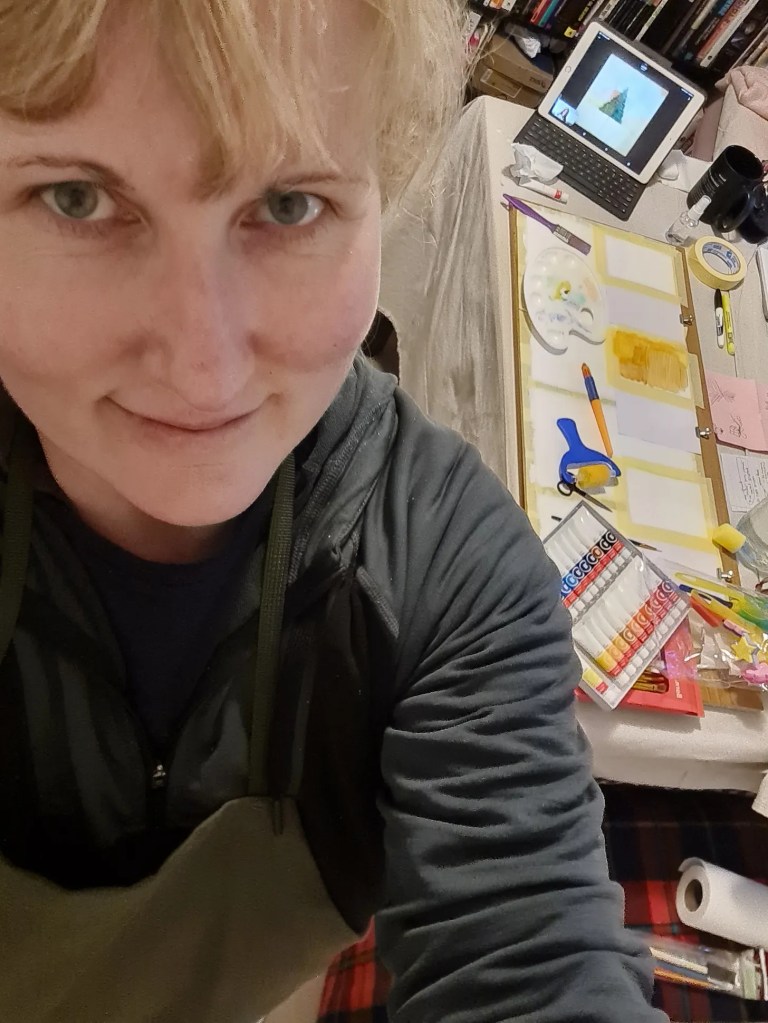
Miller, Marilyn. Christmas Card Painting. Melbourne, Victoria, Australia. Photograph taken November 2025.
Welcome to my new series about creativity, called A Creative Life Podcast.
In Episode 1, we explore how and why privacy and good boundaries may support the ambitious work you want to create.
The last time I visited ‘the Van Gogh Room’ at the Metropolitan Museum of Art, in New York City, I walked in and found a dozen elementary school kids sitting on the parquetry floor. They sat with their legs crossed staring up at Vincent Van Gogh’s paintings, holding clipboards and coloured pencils, and listened to their teacher who stood behind them and whispered quiet instructions.
I felt awed and inspired. I feel raw and open in galleries anyway. The work speaks to me loudly and privately. When their teacher stopped talking, the kids went to work. At the Met, the feeling of being with art, this art, is magnified. I wondered if those kids could feel the non-verbal communication with the paintings that I felt, and if being here inspired a creative crackle in their fingertips, or hindered it. After all, whether creating in a room full of masters, or in a forest, or in an empty room, what matters is being somewhere where they feel comfortable being creative. And if that was here, in an art class for kids at the Met, would they think back someday to sitting in this room, on the herringbone parquetry floor, and remember how inspired they were?
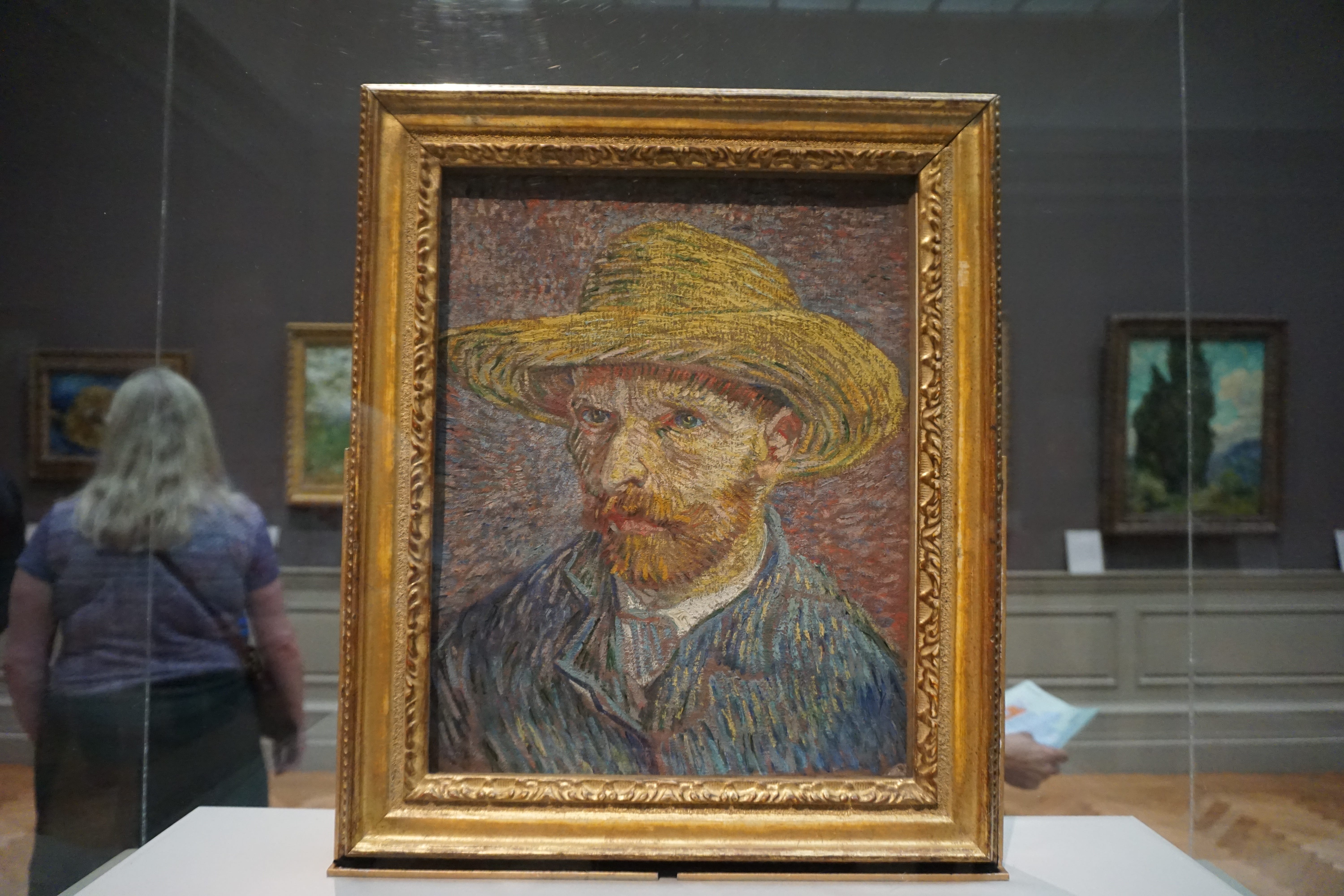
Vincent van Gogh, Self-Portrait with a Straw Hat, 1887. Oil on canvas. The Metropolitan Museum of Art, New York.
I took a walk across Central Park that evening and found my way to a quiet café, with just my notebook and a pen. I thought about how I used to create when I was a little kid. I would sit cross-legged on the carpet in my parent’s lounge room, and use the top of my large stationery box as my desk. While my parents and brother watched TV, I filled scrapbooks with notes and drawings to document my day (they were my first journals) and I wrote down the characters and stories in my head (that was my first fiction). It was so normal to me, and I was so prolific, I’m told, that my father coined the term ‘churning out’ to describe this. As in, “There she goes again,” he’d say. “Churning out.”
This sounds like I was creating in public, but I wasn’t. It was far from it. My parents didn’t read or critique my stories unless I asked them to. I liked it that way, and over the years I enjoyed creating in private. I need to be free of distraction and early feedback. I need focus.
But my inner five-year-old jumped with glee seeing those kids sitting on the floor, that day, at the Met. But I wondered, if it had been me sitting there, would I have been the one sitting on the far end? Or in a row behind, holding my arms around my work so no-one could see? It’s the same now. I understand the gravitational pull to post to social media, but I know I have to be careful with all of that. I’ve learned to share my work-in-progress with very few people. I need focus and time until it’s ready.
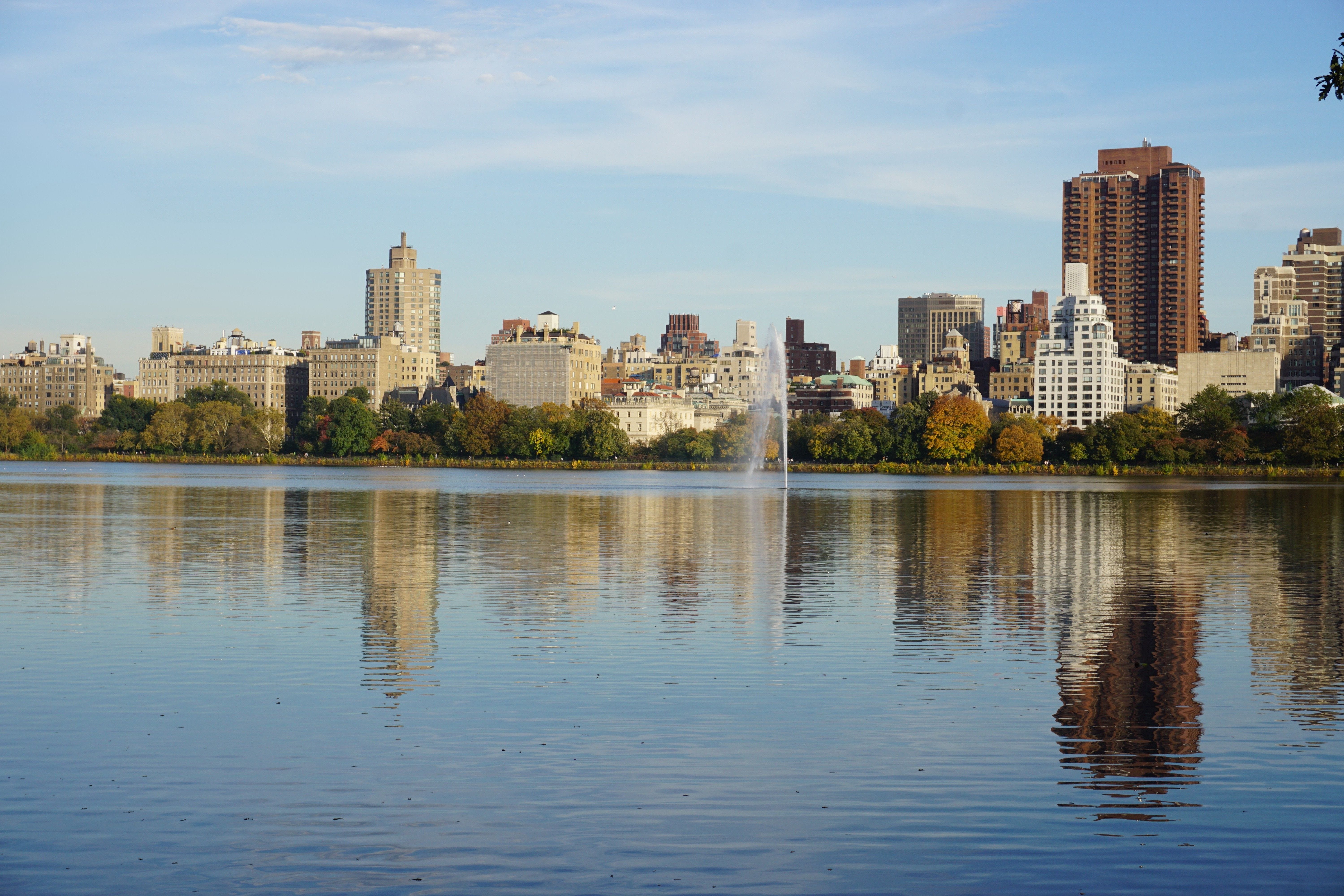
Marilyn Miller, Jacqueline Kennedy Onassis Reservoir, Central Park, New York City, October 2023. Photograph. New York City.
Building a boundary of privacy is the emotional safety structure I’ve learned to erect. I need it if I want to deep dive my creative Mariana Trench. A calm, safe place is the emotional downline to get to the terrifying, shameful and impossible questions inside me. Writers and artists are changed in those cold, dark waters. And quiet is the armour we need to hunt leviathan.
I like to think that when I get fearful, and stuck in the boat on the surface, I can return to my childhood memories of my own chewed and split coloured pencils, and how they ignited a creative fire in my fingertips. Creating was easy then, as a kid. As effortless as pushing myself to-and-fro on a swing in the park. But I know holding a creative state as an adult is more complex. We simply have more stuff. More doubt. More perilous emotional dives. Recalling a warm childhood memory, or sailing through rooms of other people’s art, no matter how inspiring, is not enough. Creating a fully accomplished project isn’t effortless. It’s work. It requires determination and goals, dedication and resilience.
That’s the difference between long Saturday afternoons, sitting on the carpet in my parent’s loungeroom, ‘churning out’, as a kid, and the creative work I do now. It is work. But the foundation is the same. If the crackle in my fingertips dims, I remember I need a protected space where there’s no pressure, and no expectation. Just me and the creative force.
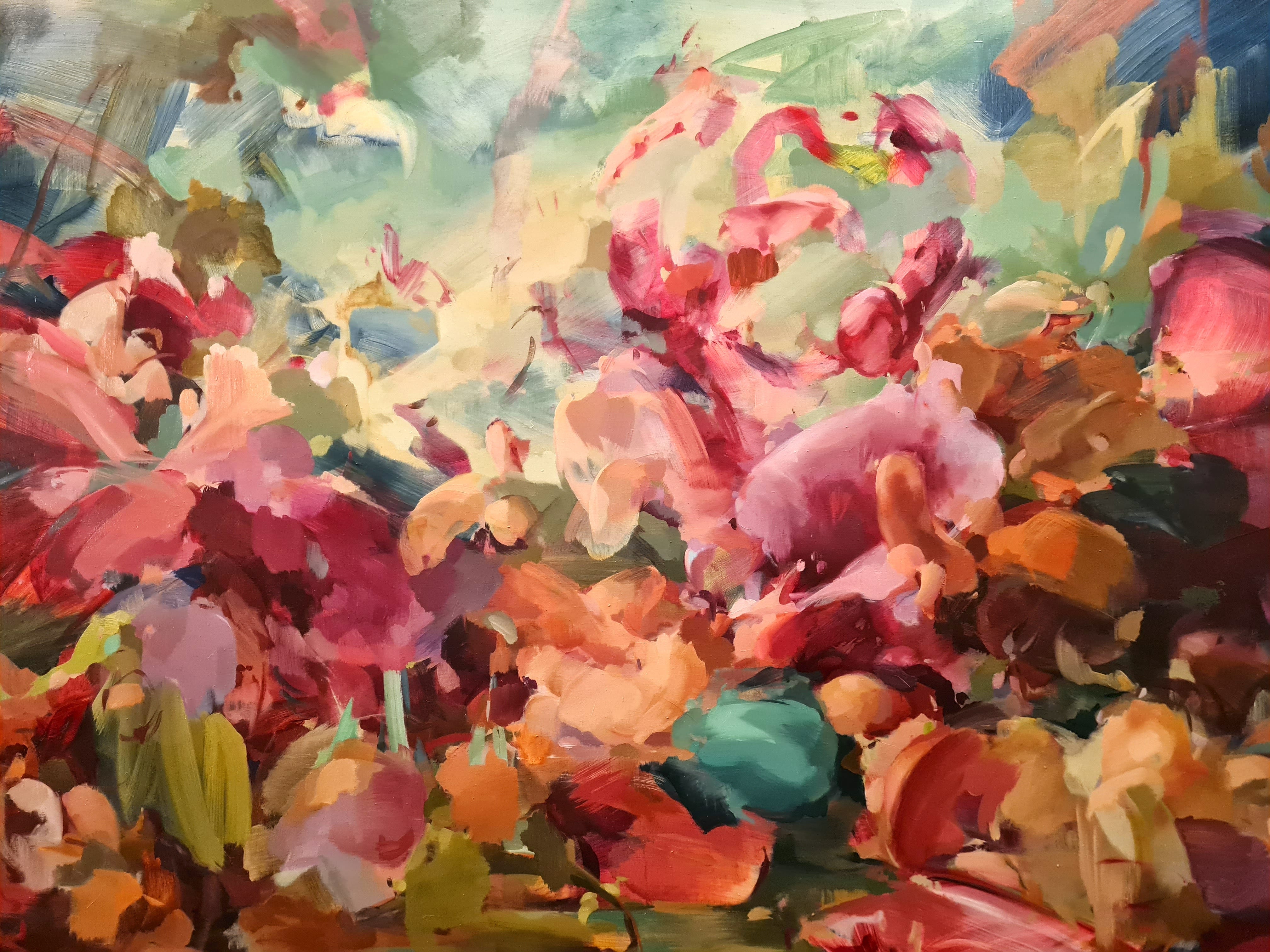
Flora Yukhnovich, A taste of a poison paradise (2023), oil on canvas. National Gallery of Victoria, Melbourne.
Next Month — November’s Newsletter: The Robots Are Here, Why Should We Create?
Next month I’ll discuss why humans need to keep creating in a world saturated by AI-generated content. I’m writing a novel about a man trapped inside a robot’s body, it’s called Machine City 2050, so I’ve researched and thought a lot about this. I’ll also be sharing my thoughts on Ishiguro’s masterpiece Klara and the Sun.
Until next time…
Thank you for reading, and please let me know your thoughts about being creative. If this piece reached you, and you’d like more of it, please consider subscribing. It’s free, and the door is always open to thoughtful creative people like you. Until next time, I wish you a wonderfully creative few weeks. And see you in the comments. Bye for now. – Marilyn.
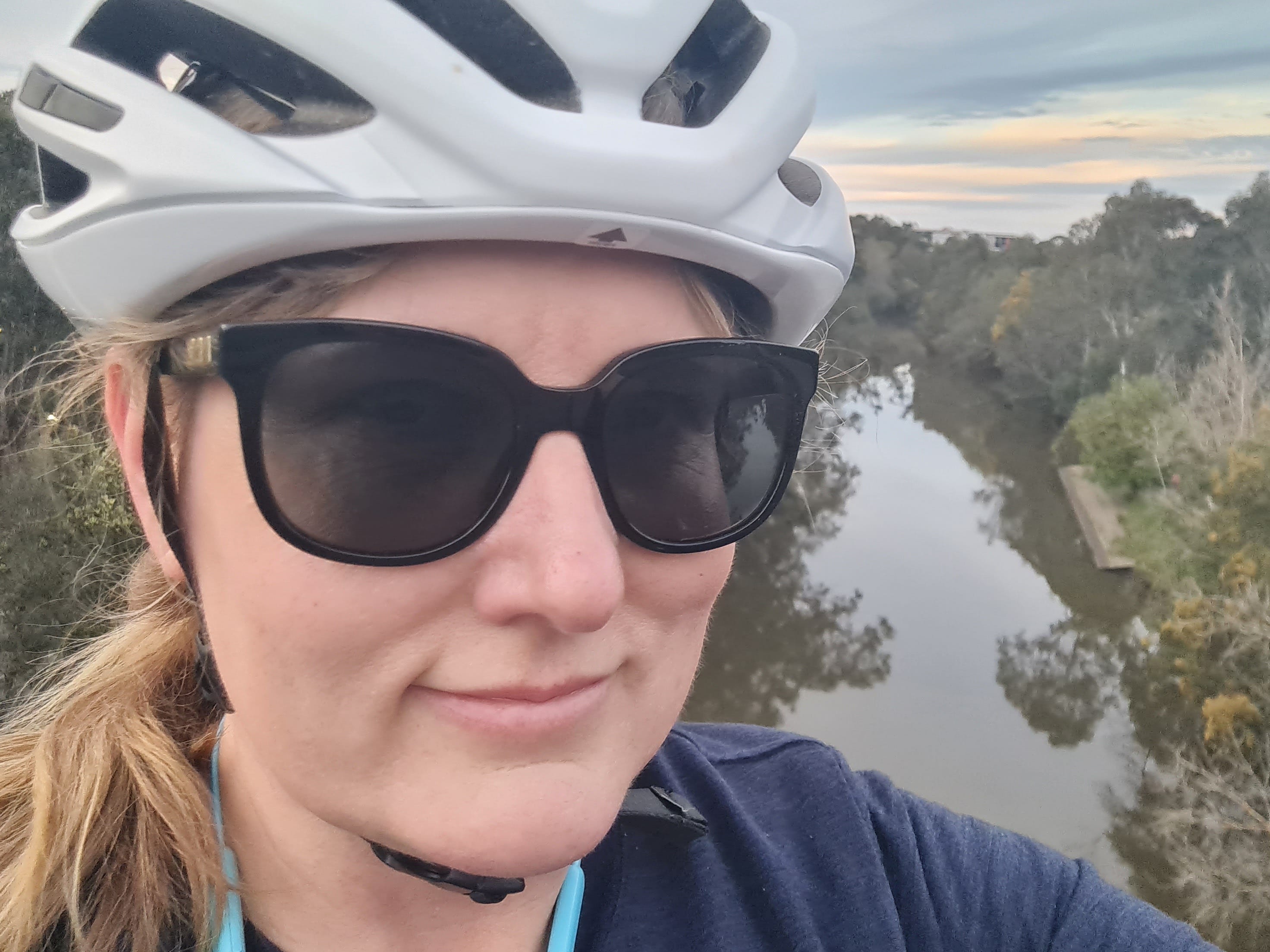
Cycling near my home, October 2025
Podcast thumbnail image credit: Gino Severini, Dancer = Propeller = Sea (1915), The Metropolitan Museum of Art
Writers don’t necessarily need a studio to write in. We need something to write with, to write on, and to write about.
But for the work I do, I also need research materials, hard-copy volumes, a laptop, lined notebooks, a printer for handwritten edits, highlighters, post-it notes, tape, and scissors. And sometimes, I need wall space to paste things up so I can look at them for a while.
I’m lucky enough to have a room at home where I can do all of this in, but I’m often not there. I like to create out in the world. It inspires me and forces me to write. At home there are too many distractions. If I’m at a public library the people around me are working, too. Time is precious. Some are talking to each other. Some have interesting shoes or hair. Some are distracted. And many, are people I never see because I’m absorbed in my own work. They wash in and out of the makeshift ‘workroom’, the place where I happen to be writing that day, and I’ll never even know they were there because I’m in my internal studio. An internal place. A creative state of mind.
I studied photography and graphic design, writing and story boarding at Central St Martins in London. They had classrooms and studios in Central London then, and I have fond memories of walking the halls past the fashion and lithography studios. I loved the painting and sculpture up on display. I’d stop and read the commentary to the contemporary art pieces, and marvel at the thinking that went into creating them. They were clever and moving. I walked to my class with a new understanding of the world. They were thought made form. My life had been changed. That’s the power of art. I’ve always remembered and respected that.
Sometimes when I’m writing I imagine dozens of creative people around me. They’re spread across the city and the world, dancing with the creative force the way I am. And I think about how we’re all in that same ‘place’, in a mental or spiritual field of creativity, cheering each other on.
That feeling, that place inside, is a more substantial studio than one with four walls, and a window, and good heating, although, that’s vital, too. An internal cathedral where the creative practice is safe and nurtured and supported is essential for sustained practice. And it’s a wonderful place to be. – Marilyn Miller
In this wonderful talk, given by the Art Institute of Chicago’s curatorial assistant Megan True, I loved hearing how Caillebotte purchased paintings from his Impressionist friends to support them financially, and artistically. I didn’t know that happened, or that the Impressionist painters traded paintings among each other.
Caillebotte was a collector and an artist himself, among artists, in a tradition of Impressionism that was shaped. I never really thought about that until now, that there was a movement and someone like Caillebotte recognised it as such, and had the foresight to shape the legacy of it as he collected the works of his friends.
What I love most about Tracey Emin in this interview is her openness, especially how she describes treating her canvases and letting them sit until it’s time to work on them. She shares example after example of each piece’s journey, reminding me that as a creative, you exist in two worlds. One foot is in the physical act of making—mixing paint, researching characters, warming up, wetting the clay. The other dances with the creative force, asking deeper questions and allowing the work to unfold. And often, that means returning to it again and again.
Listening to the experiences and advice of great artists—through books, in person, or now through incredible recorded videos—feels like a remote, one-way apprenticeship. If you watch it, I’d love to hear your thoughts below.
I love this exploration of The School of the Art Institute of Chicago’s Contemporary Practices program. It’s year-long, with an instructor and peers to receive their feedback and experience their example. What a dream: a structured place to go and create with all of the supports to create meaningfully. I hope you enjoy watching it.
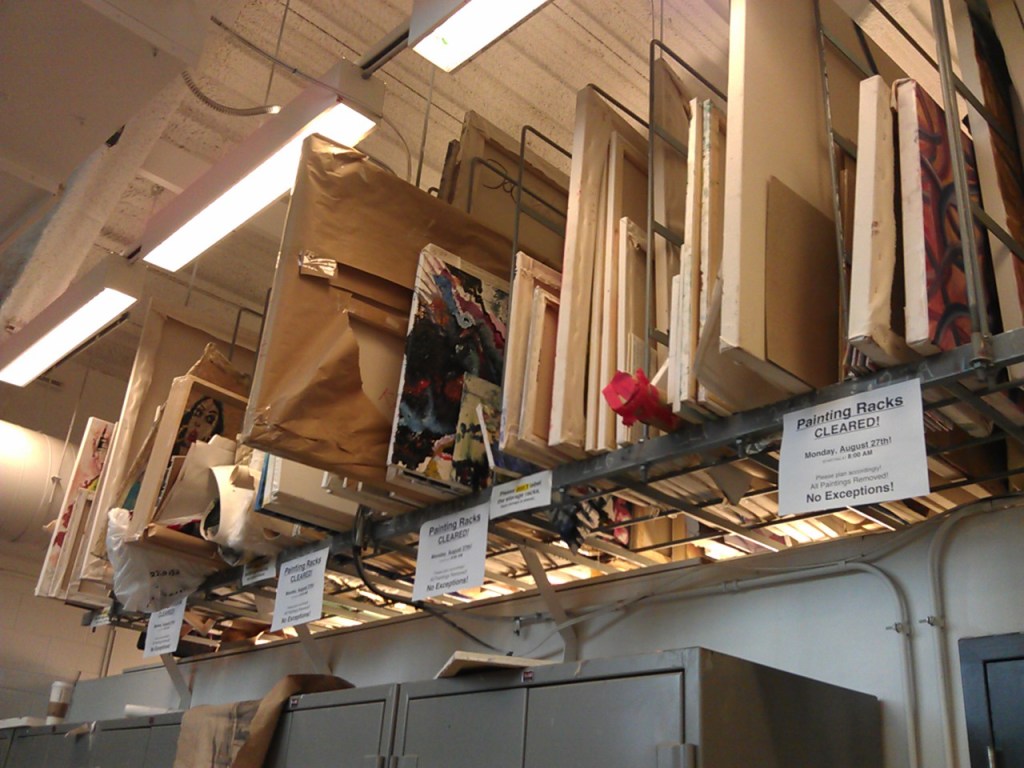
Marilyn Miller, School of the Art Institute of Chicago, July 2012. Photograph. Chicago.
What is a Studio Practice for Writers? And what is a studio practice?
A studio practice for artists refers to the structured and often habitual way in which an artist approaches their creative work within a dedicated workspace. It encompasses the routines, materials, techniques, research methods, and conceptual frameworks that shape the artist’s creative output. A strong studio practice involves not just making art but also engaging in reflection, experimentation, skill development, and professional organization.
Key Elements of Studio Practice for Artists
Physical Space – A designated studio or workspace that supports the artist’s creative needs.
Materials & Tools – The specific media, tools, and resources used to produce work.
Creative Process – The methodologies an artist follows, including ideation, sketching, prototyping, and final execution.
Routine & Discipline – A schedule or workflow that ensures consistency and progress.
Research & Experimentation – Engaging with art history, theory, and contemporary practices, as well as exploring new materials or techniques.
Documentation – Keeping track of ideas, progress, and completed works through journals, sketchbooks, photography, or digital archives.
Critical Reflection – Self-evaluation, critique, and refinement of work over time.
Professional Development – Networking, exhibiting, marketing, and managing the business side of an artistic career.
In contemporary discussions, studio practice often extends beyond just physical making—it includes conceptual work, interdisciplinary approaches, and even digital or performance-based exploration. The term is also used in art education to describe how students develop their creative methodologies.
Images below: 2014 Exhibit at the National Gallery of Victoria, Australia, and me.



 Studio Practice For Writers